Key points
- NVH means noise, vibration and harshness; needle punched felt reduces it by absorbing sound and slowing heat in the air trapped between its fibres.
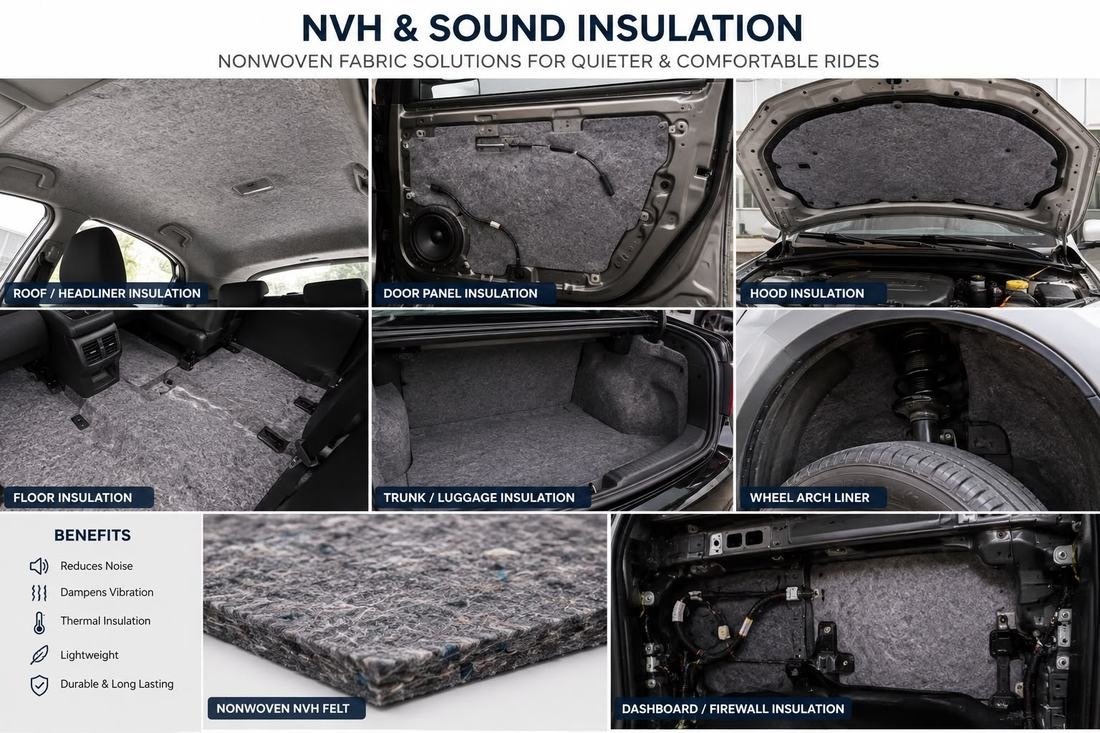
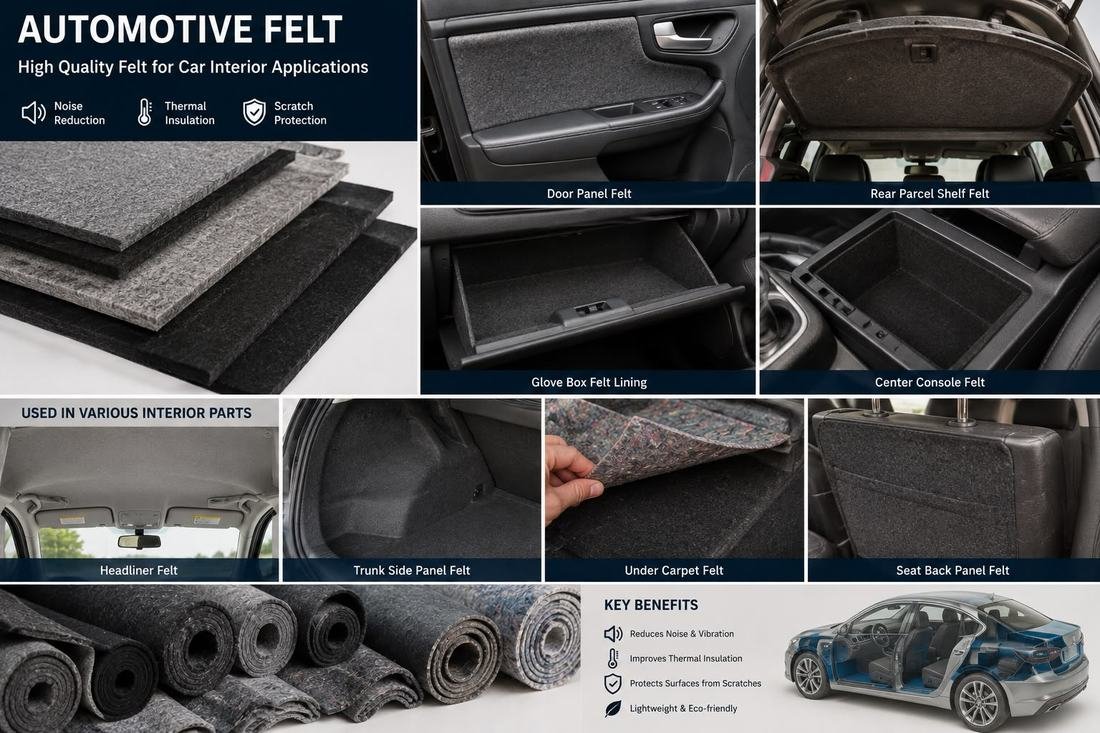
- It is used in carpet backing, door panels, headliners, boot and wheel-arch liners, and dashboard and engine-bay insulation.
- Performance depends on thickness, density, fibre and finish, so felt is specified per component; polyester is generally chosen near heat.
- Trial a sample in your own component, because moulding, laminating or stitching changes how felt behaves.
What NVH means
NVH stands for noise, vibration and harshness: the sound and feel that reach the people in a vehicle from the road, the engine and the body. Controlling it is a matter of absorbing sound, damping vibration and blocking heat before they reach the cabin.
How nonwoven felt helps
A needle punched felt is a dense network of fibres with air trapped between them. As sound passes through, the moving air rubs against the fibres and part of its energy is lost as heat, so less sound is reflected back or passed on. The same trapped air slows the flow of heat, which is why the felt also works as thermal insulation.
Performance is set by thickness, density, fibre and surface finish, which is why the felt is specified per component rather than off a shelf. Felt is also resilient and lightweight, which helps a vehicle keep weight down.
Where it is used in a vehicle
- Carpet backing, floor mats and parcel trays
- Door panels, headliners and roof liners
- Boot liners and wheel-arch liners
- Dashboard and engine-bay insulation
- Seat padding and NVH control layers
Our range is set out on the automotive products page: general needle punched interior felt, acoustic and thermal insulation felt, and NVH and sound insulation fabric.
Choosing between the three materials
General interior felt is the starting point for backing, liners and trays where the job is cushioning, shape and light insulation. Acoustic and thermal insulation felt is the choice where both sound and heat need managing — engine compartments, roof liners and interior panels.
NVH and sound insulation fabric is for assemblies where controlling noise, vibration and harshness is the main requirement, in automotive, industrial and appliance builds. Where a component sits between these, describe it and we will suggest a construction.
Test it in your own component
Felt behaves differently once it is moulded, laminated or stitched into a part, so trial a sample in the real component: check how it forms, how it fits, and how it performs against your own acoustic and thermal tests. Samples are available on request, and GSM, thickness and density can be adjusted after you have tested.
What to specify
- The component — floor, door panel, headliner, engine bay — and how the felt is used
- GSM, thickness and density, or the acoustic or thermal target
- Fibre — polyester or PP; polyester is generally the choice near heat
- Operating temperature the felt will see
- Colour and surface finish
- Roll width — we supply 5.0–5.2 m — and how it will be cut or moulded
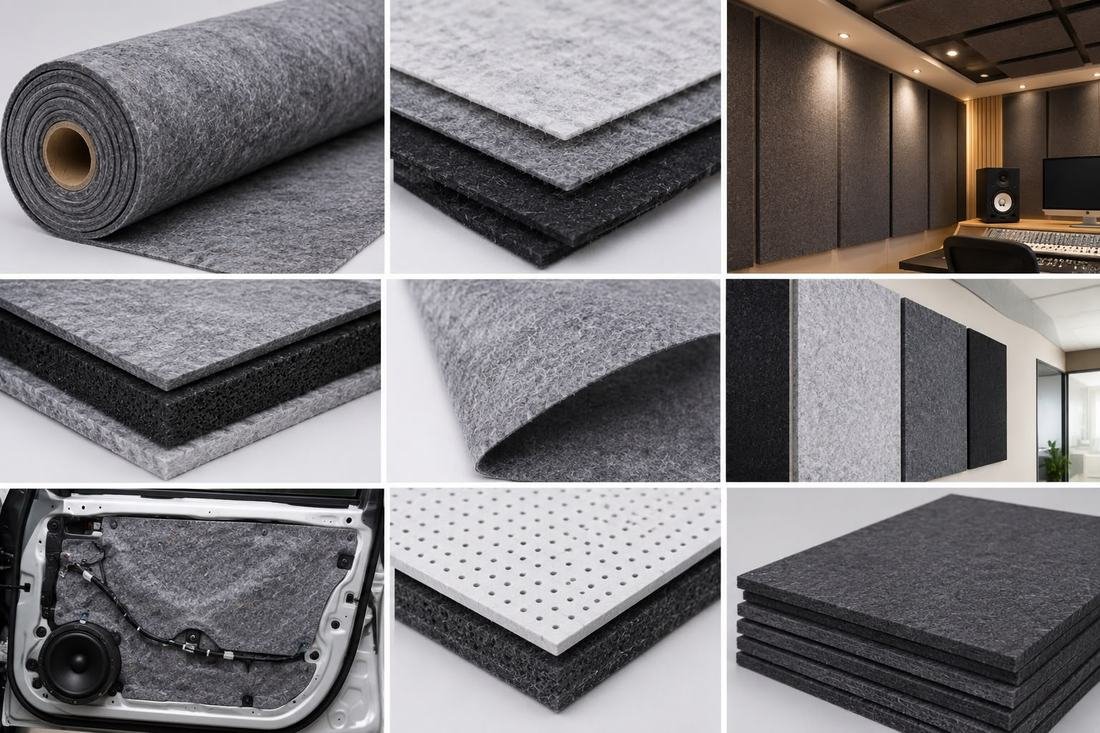
The felts are easy to cut, mould, laminate, stitch and die-cut, so they move straight into component production.
Questions
What is the difference between NVH fabric and acoustic and thermal insulation felt?
NVH fabric is designed specifically to reduce noise, vibration and harshness, and is tuned for sound absorption, density and weight. Acoustic and thermal insulation felt combines sound absorption with heat insulation for interiors, engine compartments and roof liners.
Can automotive felt be moulded to shape?
Yes. Our felts can be cut, moulded, laminated, stitched and die-cut, so they can be formed to a component.
Which fibre should I choose for an engine bay?
Polyester generally tolerates higher temperatures than polypropylene, so heat-exposed areas often call for polyester. Send us the operating temperature and we will recommend a fibre and construction.