Key points
- Needle punching tangles fibres mechanically with barbed needles; thermal bonding fuses low-melt fibre with heat. Neither needs glue.
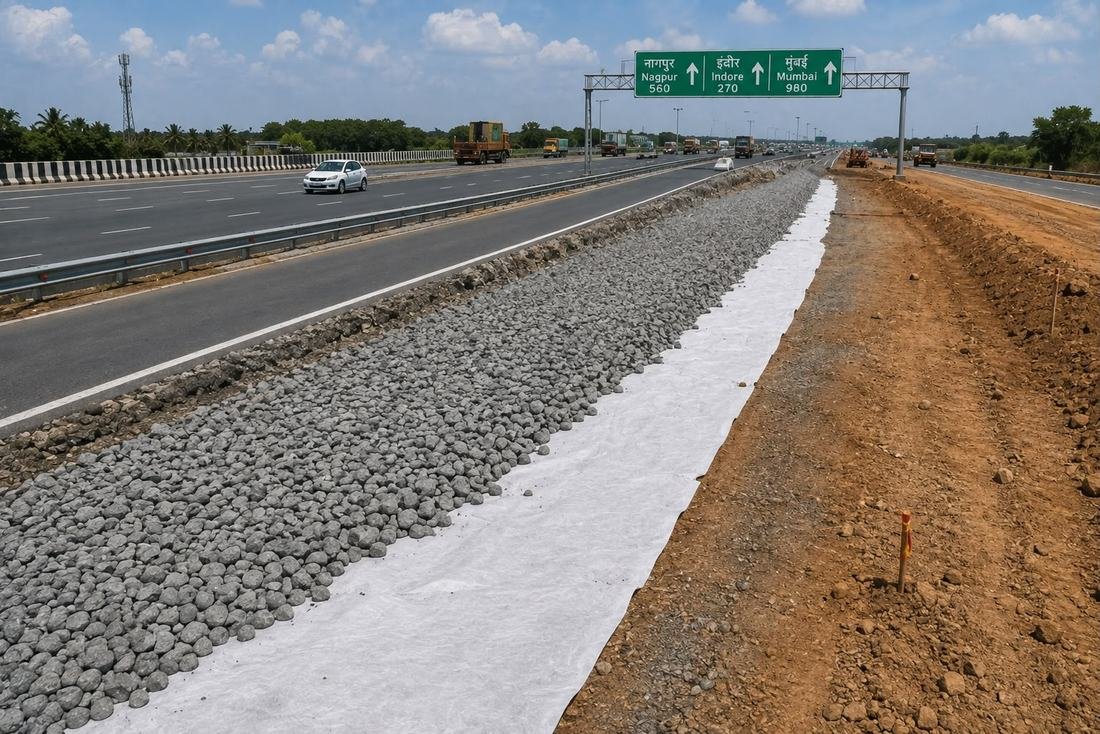
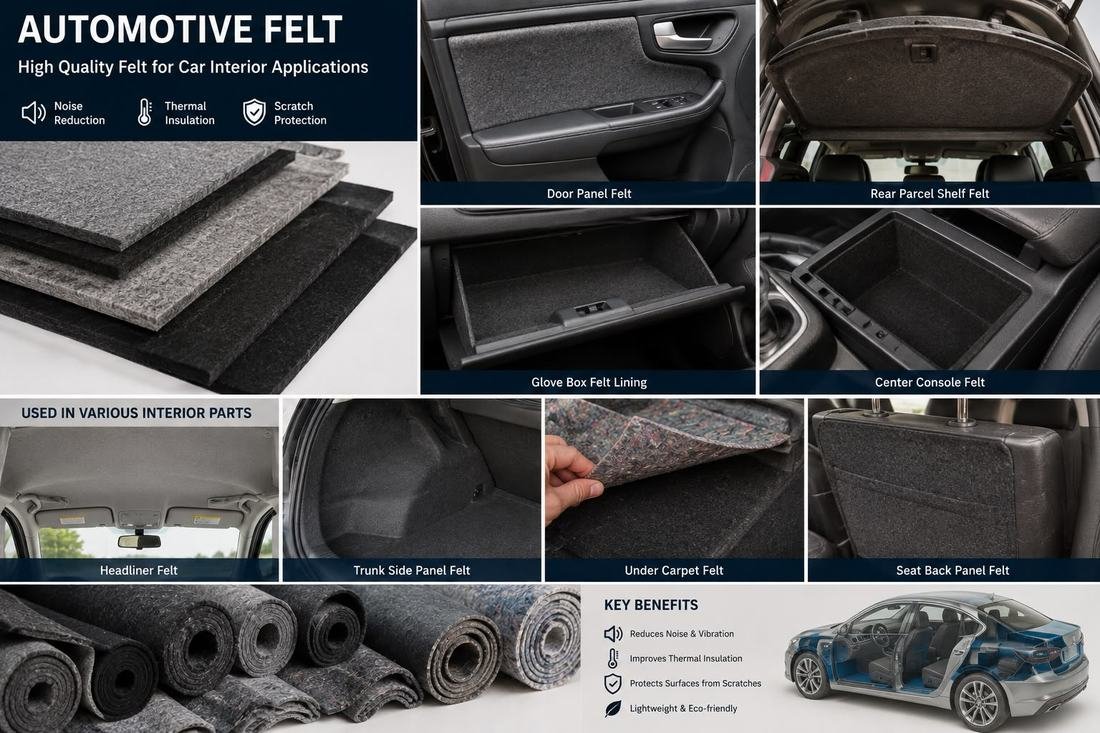
- Needle punched felt is usually denser, firmer and more stable, so it is the usual choice for geotextile, automotive and filter felt.
- Thermal bonded material is usually lighter, loftier and softer, and suits padding and linings; it needs low-melt fibre in the blend.
- A web can be needle punched and then heat-set to combine both.
How needle punching works
Fibres are first carded into a web. The web then passes under boards of barbed needles that punch through it many times. Each stroke drags fibres from the surface down into the body of the web, tangling them mechanically. No adhesive and no heat are needed to hold the fabric together.
Because the needling can be set lightly or heavily, density and thickness are controlled directly by the process. That is why needle punching is the usual route to dense, dimensionally stable felts.
How thermal bonding works
In thermal bonding the web includes low-melt fibre. When the web passes through heat, the low-melt fibre softens and fuses where fibres cross, then locks the structure as it cools. The bond comes from the fibre itself, so no chemical binder is needed.
The result is generally a lighter, loftier and softer material with a clean surface, which is why it is chosen where feel and resilience matter.
The two processes side by side
| Feature | Needle punched | Thermal bonded |
|---|---|---|
| How fibres are held | Mechanically entangled by barbed needles | Low-melt fibre fused by heat |
| Typical character | Dense, firm, dimensionally stable | Lighter, loftier, softer |
| Density and thickness set by | How heavily the web is needled | Web weight and how it is heated |
| Fibre choice | Wide — most fibres can be needled | Needs low-melt fibre in the blend |
| Common uses | Geotextiles, automotive and NVH felt, filter felt, carpet backing, packaging felt | Padding, linings and products that need a soft, resilient, clean surface |
Which one should you choose?
Start from the job the material has to do. If it will carry load, resist abrasion or hold its shape — under a road, in a vehicle floor, in a filter bag — a needle punched felt is the usual choice. If softness, loft and a clean face are the priority, thermal bonding is worth considering.
Fibre matters too. Thermal bonding depends on low-melt fibre being in the blend, which narrows the fibre options; needle punching works with a wider range. If you are unsure, describe the application in an enquiry and we will recommend a material — samples are available on request.
What Kiran Nonwovens makes
Kiran Nonwovens produces both needle punched and thermal bonded nonwovens, from 100 to 1200 GSM in roll widths of 5.0–5.2 m. Needle punching is the process behind our geotextiles, automotive felt and most of the range; see how it is made for the manufacturing capability.
Seen "airlay" listed next to "needle punched"? Airlay is a way of forming the web before it is bonded, not a rival to needle punching; our airlay vs needle punch guide explains.
Questions
Is needle punched nonwoven stronger than thermal bonded?
It depends on the fibre, the weight and the construction, so there is no single answer. Needle punched felts are typically dense and dimensionally stable, which is why they are the usual choice for geotextiles and automotive felt. Tell us the strength or stability your application needs and we will confirm what suits it.
Do these fabrics use glue or chemical binder?
Neither process needs a chemical adhesive to hold the web together. Needle punching entangles the fibres mechanically; thermal bonding fuses low-melt fibre with heat. A fabric can still be laminated or bonded to another layer as a separate step.
Does Kiran Nonwovens offer both processes?
Yes. We make needle punched and thermal bonded nonwovens in polyester, PP (virgin and recycled), viscose and custom blends, and develop custom materials where no standard product fits.
Which is better for insulation and padding?
Thermal bonded nonwoven is often chosen for lofty, resilient padding and wadding, because heat-set low-melt fibre holds an open, springy structure. Needle punched felt is denser, so it is common where a firmer insulation layer is needed, such as automotive felt. The thickness and density your part needs decide.
Which one is used for geotextile?
Nonwoven geotextiles for roads, drains and liner protection are usually needle punched, because the entangled structure is tough, permeable and stays stable under load. See our nonwoven geotextile guide for the uses.
Can a fabric be both needle punched and thermal bonded?
Yes. A web can be needle punched and then heat-set, combining mechanical entanglement with thermal bonding to adjust stiffness, surface and stability. Tell us the property you need and we will suggest a construction to sample.