Key points
- A nonwoven geotextile is a permeable, felt-like fabric laid in or on the ground; most are needle punched from polypropylene or polyester fibre.
- It does five jobs: separation, filtration, drainage, protection and erosion control.
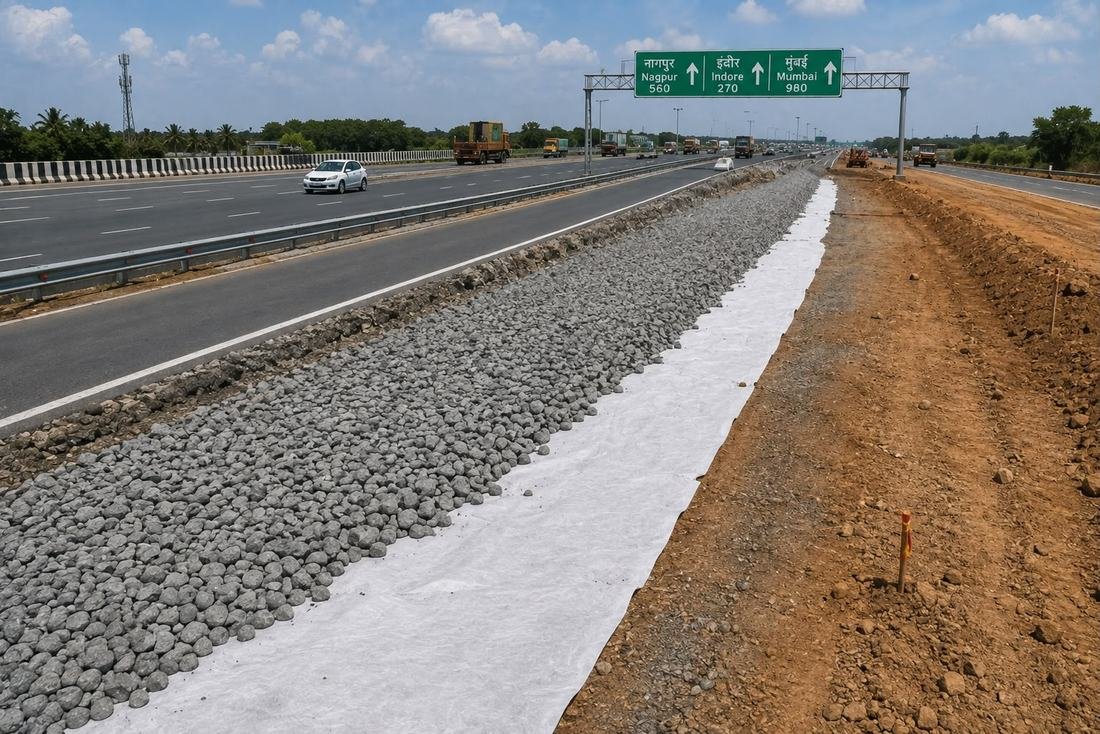
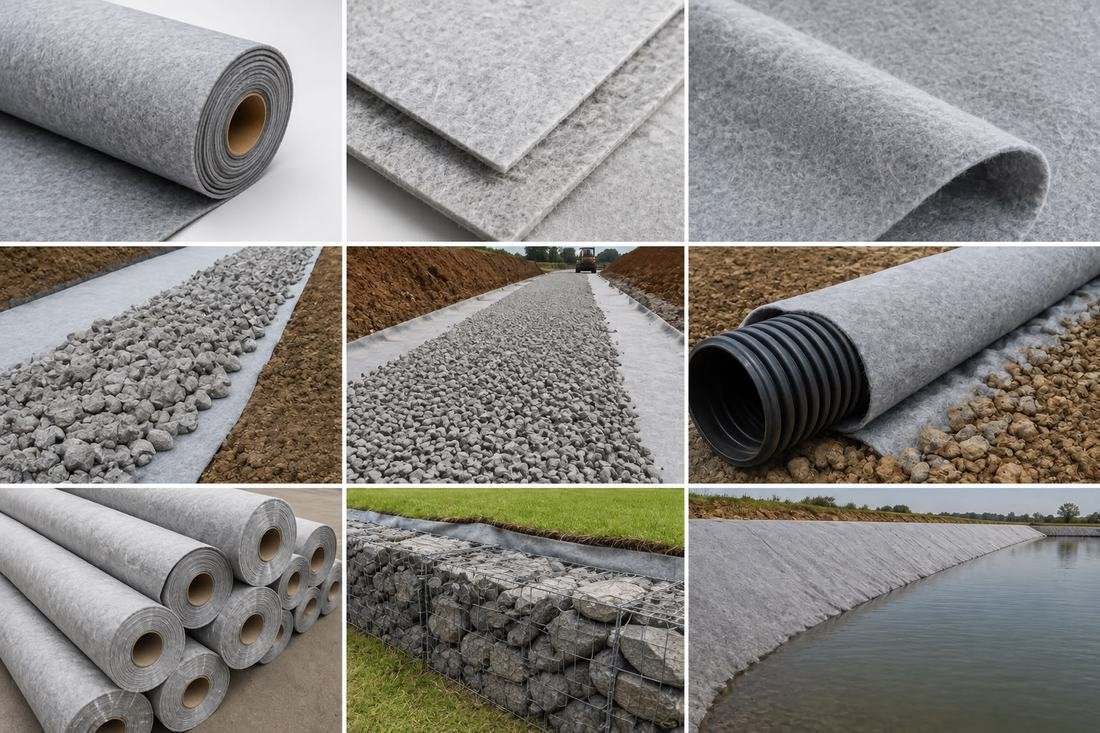
- Typical uses: under roads and railway ballast, around drains and pipes, behind retaining walls, on slopes, and under canal, pond and landfill liners.
- To order, give the function, fibre, GSM and thickness, roll size and any strength or permeability values your design requires.
What a nonwoven geotextile is
Needle punched geotextiles are made from polypropylene or polyester fibre that is carded into a web and mechanically entangled with barbed needles. The result is a thick, felt-like fabric that lets water pass through while holding soil in place.
That felt-like structure is what suits it to the jobs below. It is permeable, it cushions, and it has a wide, consistent surface that fine soil cannot easily wash through.
The jobs a geotextile does
- Separation — keeps a soft subgrade and the aggregate above it from mixing, so the road or platform keeps its designed thickness.
- Filtration — lets water pass while retaining soil particles, so a drain does not clog with fines.
- Drainage — carries water through and, in thicker grades, along the plane of the fabric.
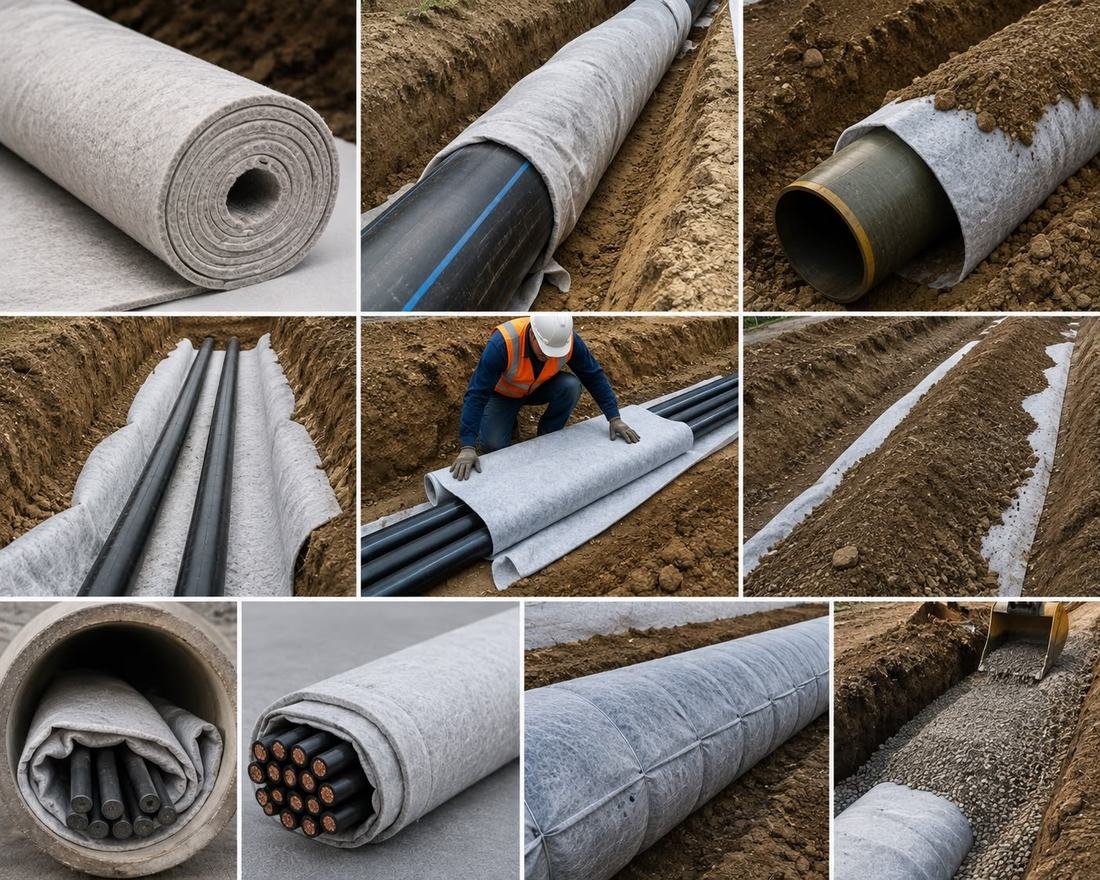
- Protection — cushions a membrane, pipe or cable against stones, backfill and abrasion.
- Erosion control — holds soil under rock or on a slope while water flows through.
Where a project also needs the fabric to add tensile strength, confirm the required strength against the project design before choosing a grade.
Uses of non woven geotextile
| Use | Main job | Read more |
|---|---|---|
| Roads and pavements | Separation, filtration | Geotextile for road construction |
| Railway track | Separation under ballast | Railway track guide |
| Embankments on soft soil | Separation, drainage | Embankments guide |
| Drains and pipe wrapping | Filtration | Drainage and erosion control guide |
| Behind retaining walls | Filtration, drainage | Retaining wall drainage guide |
| Canals and ponds | Protecting the liner | Canal and pond lining guide |
| Landfills and mines | Protection, filtration | Landfill and mining guide |
| Geobags for river and coast | Containment, filtration | Geobag fabric guide |
| Buried pipes and cables | Protection | Pipeline and cable protection geotextile |
Each use has its own guide: roads, railway track, embankments on soft soil, drains and slopes, retaining walls, canals and ponds, landfills and mines and geobags. For laying it on site, see how to install nonwoven geotextile.
Our products for these uses: PP geotextile for civil works for separation and filtration under roads, railways and embankments; drainage and erosion control geotextile for drains, walls and slopes; and pipeline and cable protection geotextile for buried services.
Polypropylene or polyester?
Both are used for needle punched geotextiles. The choice depends on the soil chemistry, temperature and exposure on your site — see our comparison of polyester and polypropylene nonwoven.
What to specify when you order
- Function — separation, filtration, drainage, protection or a combination
- Fibre — PP (virgin or recycled) or polyester
- GSM and thickness, as set by your project design
- Roll width and roll length — we supply widths of 5.0–5.2 m
- Any strength or permeability figures your design requires
- How long the fabric will be exposed before it is covered
Follow the project engineer’s installation details for overlaps and cover. Polypropylene is sensitive to prolonged sunlight, so geotextiles are normally covered soon after they are laid — confirm exposure limits for your project with the supplier.
Questions
What is nonwoven geotextile used for?
Mainly separation, filtration, drainage, protection and erosion control: under roads and railways, around drainage pipes, on slopes and canals, and around buried pipelines and cables.
What roll widths do you supply?
Roll widths of 5.0–5.2 m, a standard roll length of 50 m (other lengths on request), and GSM and thickness set to the project’s requirement.
Should a geotextile be covered after installation?
Normally yes, soon after it is laid. Polypropylene is sensitive to prolonged UV exposure, so follow your project’s installation details and confirm exposure limits with the supplier.
Can I get a geotextile sample before ordering?
Yes, samples are free. Send the application and the GSM and width you have in mind through the enquiry form.