The problem it solves
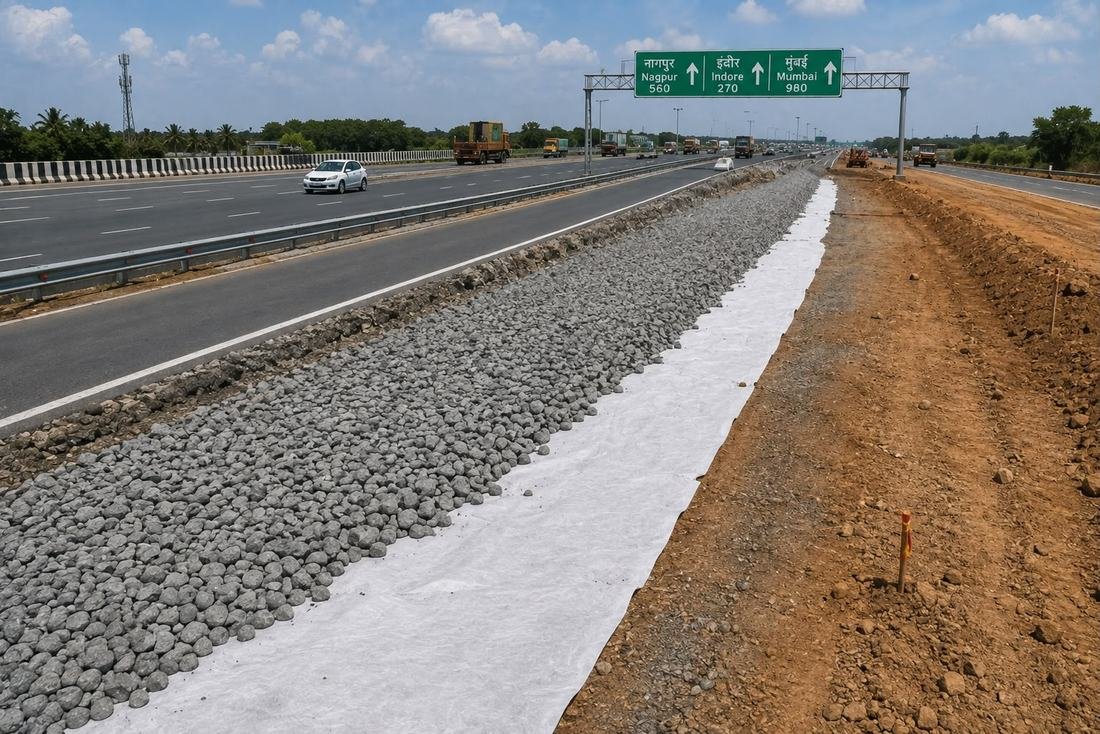
Without a barrier, the fine soil of a weak subgrade works up into the aggregate while stone presses down into the soil. Over time the base thins, water collects, and the surface rutts or cracks.
Where geotextile goes in a road
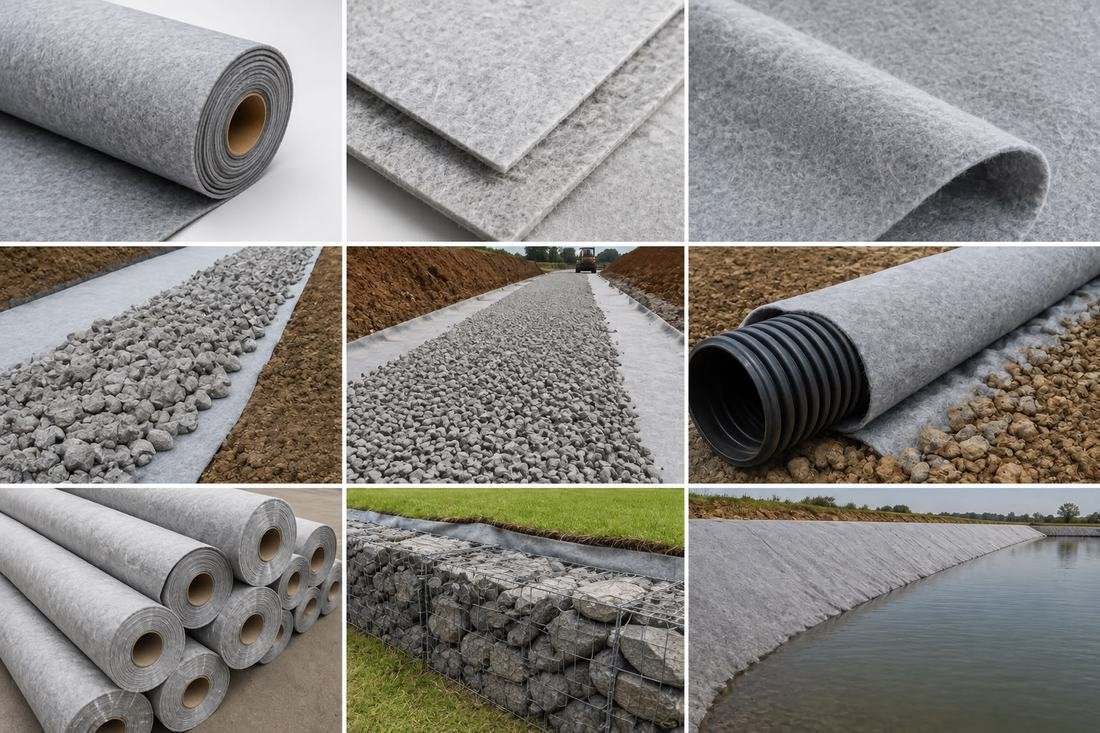
- Between the subgrade and the aggregate base — separation and filtration
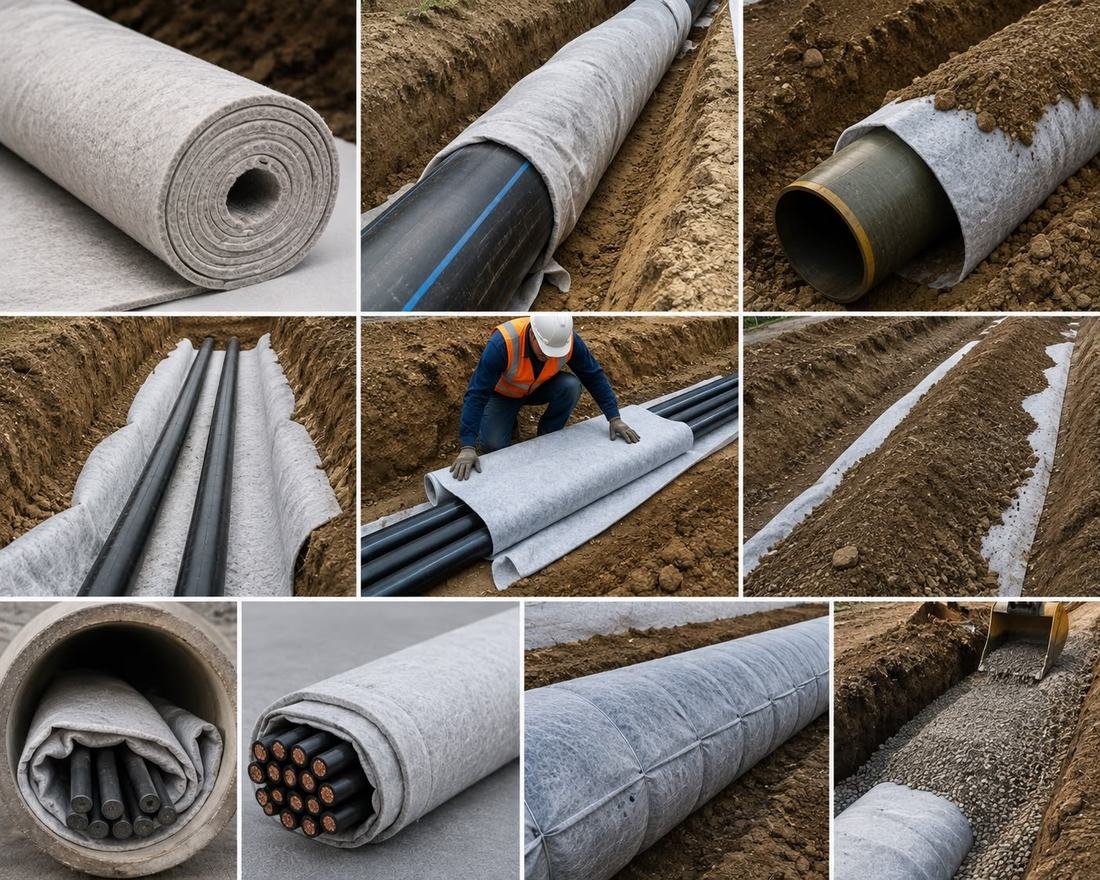
- Around edge and subsurface drains — filtration, so drains do not clog with fines
- Under embankments and on slopes — separation and erosion control
- Beneath railway ballast and haul roads — keeping the layers apart under heavy loads
These jobs are described in more detail in our nonwoven geotextile guide. For track, see nonwoven geotextile for railway track; for how to choose the weight, see geotextile GSM for road construction.
Geotextile in Indian road projects
Soft or expansive subgrades, such as black cotton soil, and heavy monsoon rain make separation and drainage the main jobs a geotextile does on Indian roads, from rural access roads to highways and embankments.
On public works, the use of geosynthetics is normally set by the project’s technical specification, which commonly refers to the MoRTH specifications and IRC guidance on geosynthetics in pavements. Your project engineer decides which clauses and test values apply; confirm the current edition and send us the figures your specification requires.
Separation, filtration and drainage
Needle punched geotextile is a thick, felt-like fabric. It separates two soil layers, lets water pass while holding fine soil back, and carries some water along its plane. Our PP geotextile for civil works is made for this role, and drainage and erosion control geotextile suits drains and slopes.
What to specify when you order
- Function — separation, filtration, drainage or a combination
- Fibre — PP (virgin or recycled) or polyester; see polyester vs polypropylene
- GSM and thickness, as set by your project design
- Roll width and length, so overlaps and waste fit your layout
- Any strength or permeability figure your project design requires
Follow the project engineer’s installation details for overlaps and cover. Geotextile is normally covered soon after it is laid; confirm exposure limits with the supplier.
Ordering for a road project
Material is made to order across a 100–1200 GSM range and roll widths of 5.0–5.2 m. Share your application, GSM, quantity and destination port through the enquiry form, or read our quote checklist first. Samples are available on request.
Questions
Is geotextile used in road construction in India?
Yes. It is used under pavements, behind drains, on embankments and on rural and haul roads, mainly for separation, filtration and drainage over soft subgrade. Your project specification sets the grade and test values.
Why use geotextile under a road?
It keeps a soft subgrade and the aggregate above it from mixing, lets water drain through, and helps the road keep its designed thickness.
Which geotextile is used for roads?
Needle punched nonwoven geotextile made from polypropylene or polyester is commonly used. The GSM and fibre depend on the project design.
What roll width do you supply?
Roll widths of 5.0–5.2 m, with GSM, thickness and roll length set to the project requirement.
Can I get a sample first?
Yes. Samples are available on request, so you can check the material before a bulk order.