Key points
- There is no single right GSM for a road: the subgrade, aggregate, traffic and the project specification decide it.
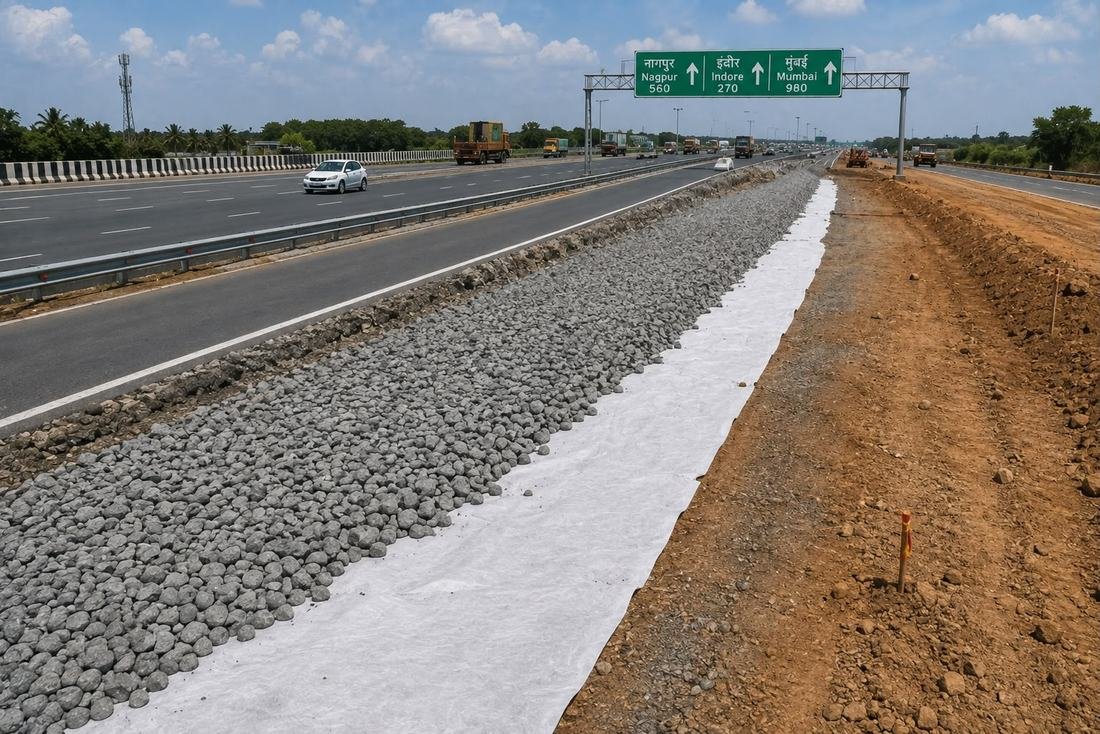
- As a rough guide, about 100–200 GSM is common for separation over firm ground, 200–400 GSM on softer or wetter ground, and 400 GSM and above under angular stone or heavy traffic.
- GSM alone is not a specification: add function, fibre, strength and puncture values, permeability and roll size.
- On Indian public works the specification usually refers to MoRTH and IRC; confirm the current edition with your engineer.
What GSM tells you
GSM is grams per square metre. In a needle punched nonwoven, more weight means more fibre, so a heavier fabric is generally thicker, stronger against puncture and better at carrying water along its own plane. Our GSM guide explains how it is measured.
It does not tell you the strength, the pore size or the permeability of the fabric. Two fabrics of the same GSM, made from different fibre or with different needling, can behave differently.
Indicative ranges, not a specification
- Lighter grades, roughly 100–200 GSM — commonly seen for separation and filtration over a reasonably firm subgrade with fine, rounded aggregate
- Mid grades, roughly 200–400 GSM — common where the subgrade is softer or wetter, or where drainage along the fabric matters
- Heavier grades, 400 GSM and above — used where angular stone, heavy traffic or a risk of puncture and installation damage calls for a thicker, tougher fabric
Treat these as the bands people usually discuss, not as design values. The grade for your road is set by the project design and the specification it cites.
Where common road situations tend to sit
| Situation | Band people usually discuss (indicative) | What pushes it higher |
|---|---|---|
| Village or access road on firm, well-drained ground, rounded aggregate | About 100–200 GSM | Wet-season soft patches, heavier construction traffic |
| Road or embankment over soft clay or wet ground, such as black cotton soil | About 200–400 GSM | A very weak subgrade, heavy axle loads |
| Haul road, heavy traffic or angular stone | 400 GSM and above | Risk of puncture and installation damage |
| Wrap around an edge drain or filter layer behind a wall | Light to mid grades, set by what the soil needs to be filtered | Coarse, angular stone against the fabric |
| Railway ballast separation | Heavier grades, set by the owner’s specification | Ballast load and angular stone |
These are the bands buyers usually discuss, not design values. They are here so you can tell whether a quote is in a sensible range, not to replace the project design.
Four questions to settle the grade
- What is under the fabric? The soil and its strength, from the site investigation, not from appearance
- What goes on top? Stone size and shape, layer thickness, and whether construction traffic runs on it
- What will drive over it, and when? Include the heavy plant during construction, not only the finished road
- What does the tender or drawing already say? If it names a grade or test values, that settles it
Answer these and your engineer can pick the grade in minutes. Send the answers with your enquiry and we will quote against them.
What else belongs in the specification
- Function — separation, filtration, drainage, protection or a combination
- Fibre — PP (virgin or recycled) or polyester; see polyester vs polypropylene
- Strength and puncture figures your design requires
- Permeability and pore size, so the fabric passes water but holds the soil
- Thickness, roll width and roll length
On Indian public works, the technical specification commonly refers to the MoRTH specifications and IRC guidance on geosynthetics. Your project engineer decides which clauses and test values apply; confirm the current edition and send us the figures your specification asks for.
Higher GSM is not always better
A heavier fabric costs more per square metre and can be harder to handle. On a firm subgrade with fine aggregate, a very heavy fabric adds cost without adding performance. Match the grade to the job instead of defaulting to the heaviest.
What we can supply
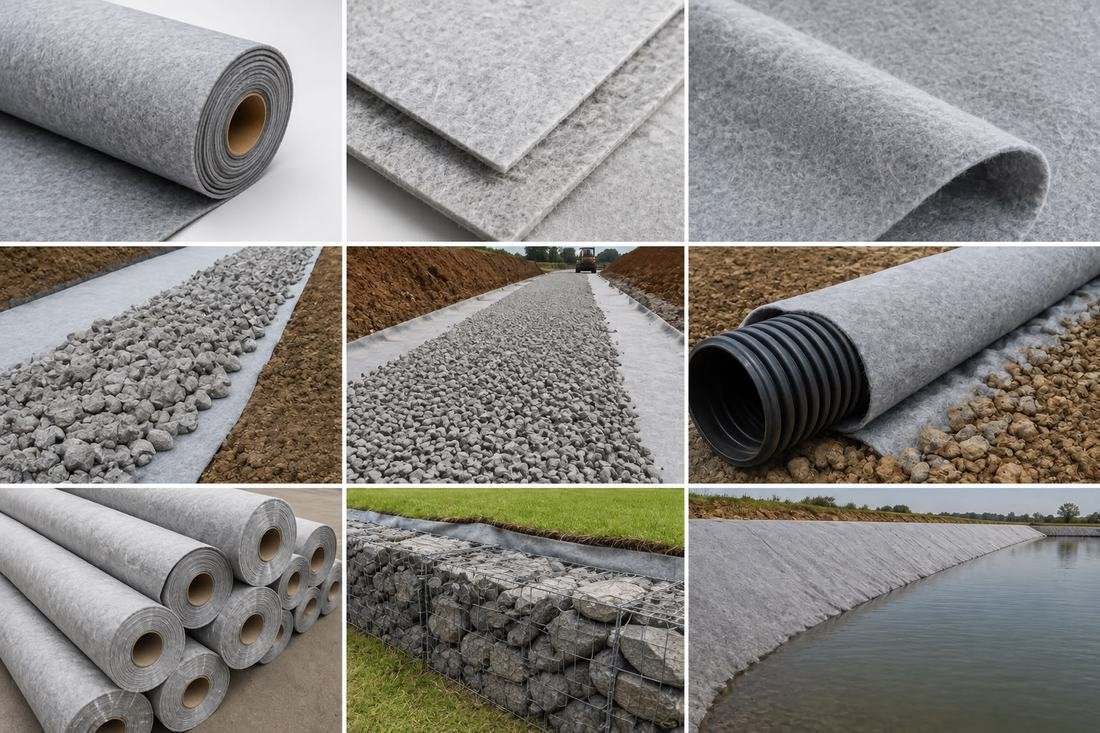
Needle punched nonwoven geotextile is made to order across a 100–1200 GSM range in roll widths of 5.0–5.2 m, in PP (virgin or recycled) or polyester. See our PP geotextile for civil works, and the wider guide to geotextile for road construction in India.
Send the GSM and the test values your specification requires through the enquiry form, or read the quote checklist first. Samples are available on request.
Questions
What GSM geotextile is used for roads?
It depends on the subgrade, aggregate and traffic. Lighter grades of roughly 100–200 GSM are common for separation over firmer ground, and heavier grades are used on soft or wet subgrades or with angular stone. The project design and specification set the value.
What GSM geotextile is used for rural or village roads?
Lighter grades of roughly 100–200 GSM are commonly discussed over firm, well-drained ground, and heavier grades where the ground is soft or wet. The project design and specification set the value for your road.
Does a government road scheme or MoRTH fix the GSM?
Public-works specifications can name the grade and the test values. Read the tender and ask your project engineer which clauses apply, and confirm the current edition. We cannot say what a particular scheme requires; send us the values it names and we will quote against them.
Is a higher GSM geotextile always better?
No. A heavier fabric costs more and may add nothing on a firm subgrade. Choose the grade the design requires.
Is GSM enough to specify a geotextile?
No. Also give the function, fibre, strength and puncture figures, permeability, thickness and roll size your design requires.
What GSM range can you supply?
Needle punched nonwoven geotextile is made to order across 100–1200 GSM in roll widths of 5.0–5.2 m.