The problem under the ballast
Trains load the track thousands of times a day. Where the formation is soft or wet, fine soil works up into the ballast as slurry, and the ballast works down into the soil. The ballast becomes fouled, drains poorly and loses the support it was laid to give, so the track needs more frequent attention.
What the geotextile does
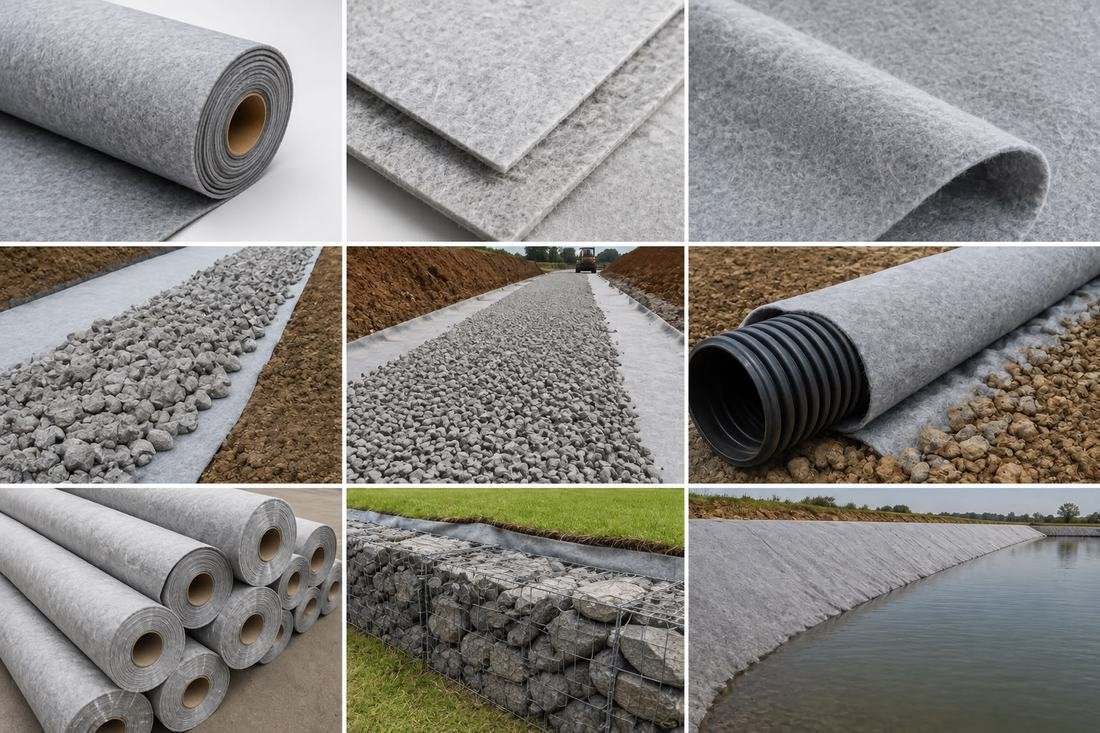
- Separation — keeps ballast or blanket stone from mixing with the subgrade
- Filtration — lets water pass while holding fine soil back
- Drainage — carries water out from under the track
- Protection — cushions the formation against sharp stone
These functions are described in our nonwoven geotextile guide.
Where it is used
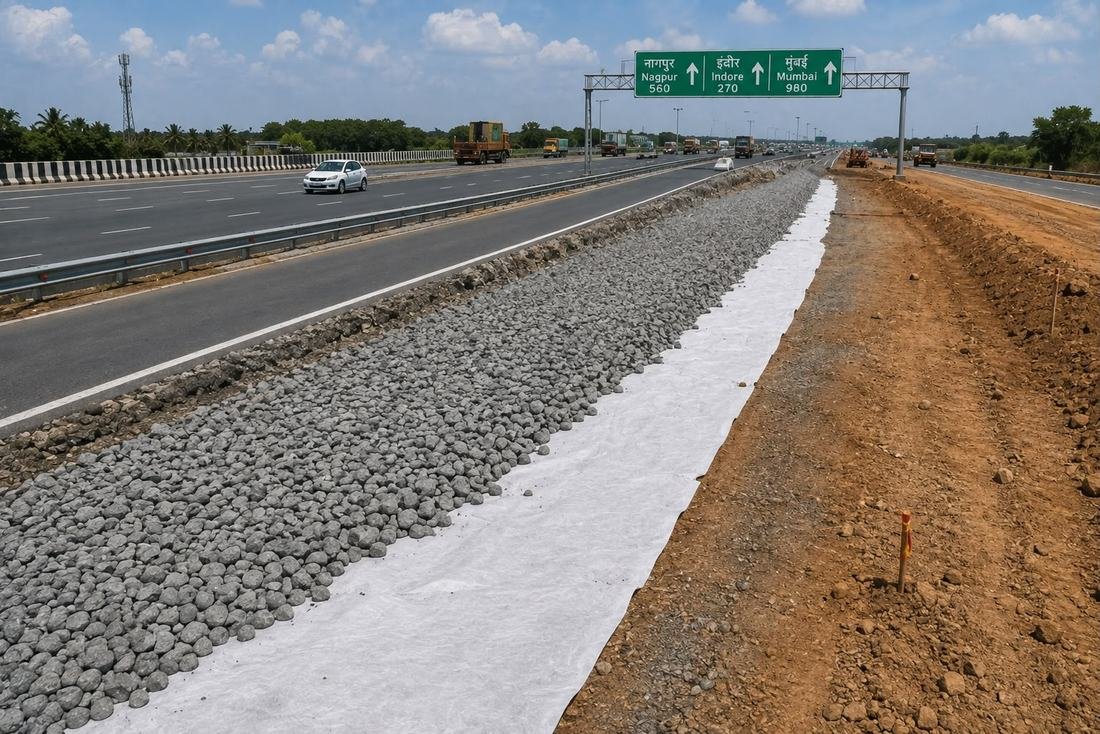
- Between the formation and the ballast or blanket layer on new track
- In formation rehabilitation, where soft spots and mud pumping have developed
- At level crossings, yards and sidings
- Under industrial and port rail sidings
Why a thick, needle punched fabric
Stone ballast is angular and heavy, and it is placed with machinery. A thick needle punched nonwoven resists puncture and abrasion better than a thin fabric, and its felt-like structure drains well. Heavier grades are normally chosen for this duty; see our GSM guide for road geotextile for how weight relates to performance.
Specifications on Indian rail projects
Railway works are normally tendered against the owner’s specification. RDSO has issued a specification for nonwoven geotextile used as a separator and filter in track, and tenders may cite it or the project’s own technical requirements. The engineer decides which test values apply; confirm the current edition and send us the figures your tender asks for.
What to specify when you order
- Function — separation, filtration, drainage or a combination
- Fibre — PP (virgin or recycled) or polyester
- GSM, thickness, and the strength and puncture values your specification requires
- Roll width and length — we supply widths of 5.0–5.2 m
- Overlap and cover, as set by the engineer; PP is sensitive to prolonged sunlight, so it is normally covered soon after it is laid
Send your requirement through the enquiry form or use the quote checklist. Samples are available on request.
Questions
Why use geotextile under railway ballast?
It keeps ballast and the soft formation below from mixing, lets water drain, and helps the track hold its alignment between maintenance visits.
Which geotextile is used under railway track?
Thick needle punched nonwoven geotextile of polypropylene or polyester is commonly used. The grade is set by the project specification.
Is there an Indian railway specification for nonwoven geotextile?
RDSO has issued a specification for nonwoven geotextile used as a separator and filter in track. Confirm the current edition and the values your tender requires.
What roll width do you supply?
Roll widths of 5.0–5.2 m, with GSM, thickness and roll length set to the project requirement.