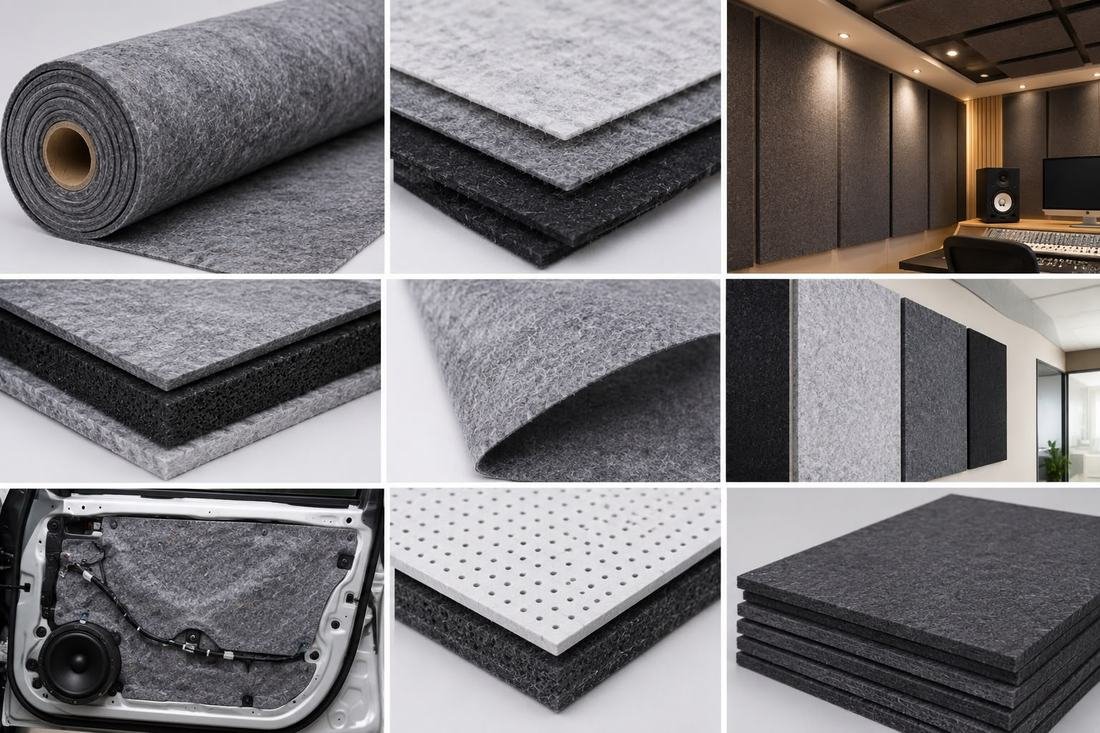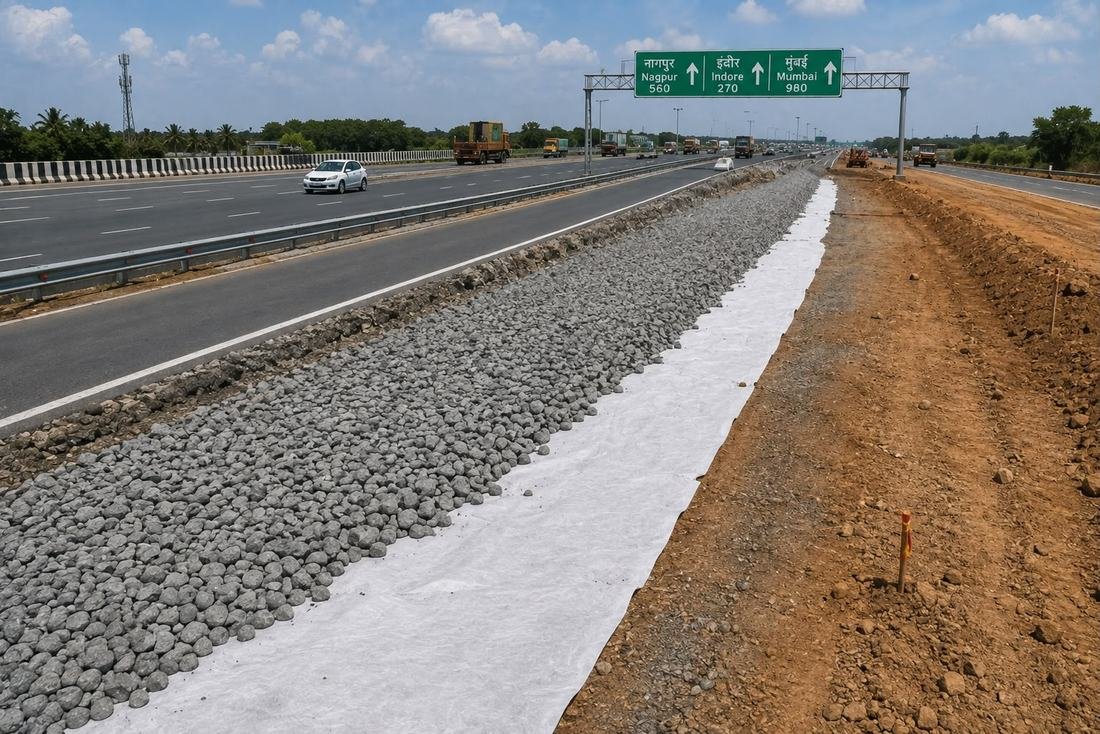
Step one forms the web, step two bonds it
| Step | What happens | Common methods |
|---|---|---|
| Web forming | Loose fibres are laid into an even sheet, or batt | Carding with cross-lapping, airlay |
| Bonding | The batt is locked into a fabric | Needle punching, thermal bonding |
So an "airlay" fabric still has to be bonded, often by needle punching or thermal bonding, and a "needle punched" fabric still had to be formed, often by carding or airlay. The better comparison is airlay against carding, and needle punching against thermal bonding.
Airlay and carding compared
| Feature | Carding and cross-lapping | Airlay |
|---|---|---|
| How fibres are laid | Combed into thin webs, then layered back and forth | Blown by air onto a moving screen |
| Fibre direction | Mostly along and across the line, set by the lapping | More random, so properties are more even in all directions |
| Batt it suits | A wide range of weights and fine, uniform webs | Thick, high-loft batts |
| Fibre it handles | Staple fibre of suitable length for the card | Often tolerant of shorter and mixed fibre |
These are general tendencies of the two methods; actual results depend on the line and the fibre. Airlay should also not be confused with "airlaid", a different product, usually made from cellulose pulp with binders, used mainly in hygiene goods.
Needle punching and thermal bonding compared
Needle punching locks fibres together by driving barbed needles through the batt many times, so the fibres tangle mechanically. Thermal bonding uses low-melt fibre in the blend and heat, so fibres fuse where they cross. Needle punching tends to give a denser, tougher felt; thermal bonding is often used for lofty, resilient wadding and for felts that are moulded.
Our needle punched vs thermal bonded guide goes through the difference in detail.
Which matters for your product
- Thick, high-loft insulation or padding: ask how the web is formed as well as how it is bonded
- Dense, tough felt for geotextile, filtration or industrial use: the bonding step and the needling density usually matter most
- Moulded parts: whether the felt carries low-melt fibre for thermal bonding
- Recycled or mixed fibre: whether the line can process it evenly
In every case, the properties you need (GSM, thickness, density, strength, loft) are what to specify. The process is how a supplier gets there; judge it on a sample.
What we make
We make needle punched and thermal bonded nonwovens, from carded webs, in polyester, PP and blends, from 100 to 1200 GSM and up to 5.0–5.2 m wide. We do not run airlay lines and do not make airlaid pulp products. If your product needs a property you associate with airlay, send the target values and a sample, and we will tell you plainly whether our route can match it.
Send it through the enquiry form. For the different nonwoven processes made in India, see nonwoven manufacturers in India.
Questions
What is the difference between airlay and needle punch?
Airlay is a web-forming method: fibres are blown by air into a batt. Needle punching is a bonding method: barbed needles tangle the fibres of a batt into a fabric. A fabric can be airlaid and then needle punched, so they are steps, not alternatives.
Is airlay the same as airlaid?
No. Airlay usually refers to forming a batt of staple fibre by air, which is then needle punched or thermally bonded. Airlaid usually refers to a pulp-based product with binders, used mainly in hygiene goods.
Is airlay better than carding?
Neither is better in general. Airlay tends to suit thick, high-loft batts with more even properties in all directions; carding with cross-lapping suits a wide range of weights and fine, uniform webs. The product decides.
Do you make airlay nonwovens?
No. We make needle punched and thermal bonded nonwovens from carded webs. Send your target properties and a sample, and we will say plainly whether our route can match them.